614 private links
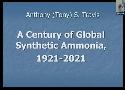
Seminar by Tony Travis, hosted by Royal Society Of Chemistry (2022-06-17)
The Swedish Research Council’s view is that everybody should be given access to research data that are financed via public funds. The recommendation below is part of our work of promoting a transition to open access to research data. The goal is to complete the transition no later than 2026.
An IUPAC project (apparently in collaboration with CODATA and CIPM, which makes it very official).
- Units of Measure for Humans and Machines, released in Oct 2020
- Digital Representation of Units of Measure in Chem. Int., vol. 42, no. 4, 2020, pp. 36.
- What's the future of digital chemical units?, presentation by Stuart Chalk at ACS Fall in Aug 2021.
- Stop squandering data: make units of measurement machine-readable in Nature vol. 605, 2022, p. 222-224.
Other IUPAC projects on digital standards. Of particular interest to us are Machine-accessible periodic table and Development of a standard for FAIR data management of spectroscopic data.
Regionala statistikområden (RegSO) delar in Sverige i 3 363 områden med en befolkning mellan 663 och 22 622 invånare. [...] RegSO är en indelning som kommer hållas oförändrad över tid, med undantag för anpassning till ändringar av enstaka kommun- eller länsgränser.
Här kan du hitta detaljerad information på stadsdelsnivå eller bostadsområde.
Databasen innehåller statistik om folkmängd efter ålder, kön, civilstånd, hushållstyp med mera. Statistik om motorfordon, ekonomisk standard, inkomst, behörighet till högskola, valdeltagande och mycket mer.
Artikel från SCB med bra introduktion till RegSO databasen
Via Cornucopia
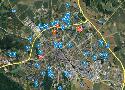
Cykelkorsningar behöver siktröjas i Uppsala. Kommunen vill skapa bättre sikt långvarigt, genom att röja sly med mera.
Karta med alla dokumenterade platser
Passerar du något ställe som behöver bättre sikt meddela uppsala@cykelframjandet.se
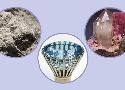
Obligatory Hank Schrader from Breaking Bad:
They're rocks, Hank!
No, they're minerals! Jesus, Marie!
If you ever wondered about the distinction, you should watch this video (3 min 31 s) from the American Museum of Natural History which does a great job explaining the difference between crystals, minerals, rocks and gems.
With the increasing focus on open science and FAIR data, IUPAC is focusing effort toward the development of digital standards for chemistry. Its Committee on Publications and Cheminformatics Data Standards (CPCDS) has compiled this page with IUPAC resources.
A commendable effort!
Well-written review, with thus nugget of a quote by Susie Alegre:
When my daughter asked why she couldn’t have an Alexa like her friends, I told her that it is because Alexa steals your dreams and sells them.
Via Arts & Letters Daily.
This is a neat way to quickly generate a QR-code, for example to transfer text from computer to phone (thanks to Solène Rapenne for the original idea and implementation). On the phone, you'll of course need to use a QR-reader app, such as Binary Eye.
xclip -o -selection clipboard | qrencode -o - -t PNG | feh -g 600x600 -Z -Using this command, whatever is in your clipboard will be encoded to QR and displayed on your monitor. Note that xclip can pull stuff from different clipboards, and in my case the contents were not picked up with -selection default but -selection clipboard did the trick.
Linux (well, really the window managers, so X11 and then, i3, Wayland, etc…) have multiple clipboards. The default ones are the Primary selection one, and the Secondary one. The names are historical accidents, but the “primary” one always has a copy of the last text you selected from anywhere, which can be pasted anywhere by clicking the middle mouse button. You just select some text and that’s it - you don’t have to do anything else and you can then middle-click paste this anywhere. The “secondary” clipboard is the “normal” Cut, Copy, Paste, Ctrl+c, Ctrl+v one.
https://duncanlock.net/blog/2022/04/06/using-windows-after-15-years-on-linux/
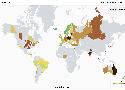
electricityMap is a live visualization of where your electricity comes from and how much CO2 was emitted to produce it.
The map is open source, and improves weekly thanks to 1700 contributors and counting.
The project has an informative FAQ, a list of its data sources, and a wiki.
An interactive 3D visualization of the stellar neighborhood, including over 100,000 nearby stars.
Pretty cool that this kind of visualisation can be run in the browser (Chromium works fine, so does Chrome). But I'm getting no sound, I suppose that's something to do with my machine.
Via Jason Kottke.
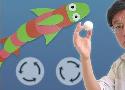
How do fish swim so quickly? Explained to great effect by professor of applied mathematics Tadashi Tokieda using a bathtub.

Amandine Le Pape (of Element.io) makes some excellent points:
Open APIs are a good first step, but we must eventually have open standard based interoperability.
An open standard is far more secure than open APIs and today’s siloed apps. An open standard can ensure end-to-end encryption (and much more) between competing apps - and be audited independently for the benefit of all.
Video by Royal Society of Chemistry, from Jan 2022.

The infographic plots cities around the world based on the urban population density and per capita transport energy use. North American cities are the least dense with highest energy use, while Asian, African, Latin American and European cities have varying densities, but fall in the category of low energy use per capita.
Via reddit.
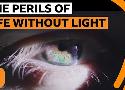
Getting enough light is vital for regulating our sleep, combatting depression and seasonal affective disorder and maintaining good physical health.

På Uppsala universitet möts vi över gränser. Här möter du människor från olika bakgrunder, med olika framtidsdrömmar och med olika förutsättningar.
Let's say you have a tablet or reserve phone without a phone number (i.e., SIM-card) that you would nonetheless like to have Signal installed on. Turns out it's possible.
BUT NOTE THAT SIGNAL WILL DE-REGISTER YOUR ORIGINAL DEVICE ONCE YOU REGISTER THE NEW ONE!
There is still no way to have Signal on more than one device, and you can't link Signal on one device to another device. Too bad, would have been nice, especially with database encrypted at rest (which Molly allows).
- Connect your secondary device to the Internet
- Install Molly-FOSS or Molly or Signal on the secondary device, and initiate Signal's registration process (enter your phone number)
- You will get a code via sms on your primary Signal device
- Enter the code on the secondary device using the numeric keyboard (this worked just fine in my case)
- Enter your Signal PIN
- With that, Molly-FOSS/Molly/Signal should start and show you your groups
While we're at it, why not install Molly or even Molly-FOSS instead of the official Signal app? The benefit of using Molly-FOSS is that we can install it on a device not using Google (the drawback is that push notifications will consume a little more battery).
- What originally sent me exploring Signal app forks was this issue
- https://github.com/mollyim/mollyim-android
- https://molly.im/fdroid/
- https://reddit.com/r/CalyxOS/comments/ptll4t/molly/
- Another Signal fork
- ooh! directory, curated collection of 1000+ blogs by Phil Gyford.
- Ye Olde Blogroll, humanly curated list of personal & independent blogs that are updated regularly. Hat tip to Ben Werdmüller.
- https://theforest.link
- https://indieblog.page
- https://personalsit.es
- https://indieweb.xyz/en
- https://blogroll.club
- https://feedle.world
- https://micro.blog/discover
- https://aboutideasnow.com
- https://nownownow.com
- R-bloggers, R news and tutorials contributed to hundreds of R bloggers.